Bed bugs are among the hardest pests to eradicate once an infestation takes hold fully. That’s because the bed bug lifespan can extend for several months, giving them ample opportunity to feed, reproduce, and spread throughout a home.

If you’ve already tried to eliminate bed bugs but they keep reappearing, it’s often because those methods don’t address every stage of the bed bug life cycle. In this blog, we’ll explain how long bed bugs live, how quickly they reproduce, and what it actually takes to eliminate them completely.
How Long Do Bed Bugs Live on Average?
The average bed bug lifespan ranges from four to twelve months, depending on their environment. Factors like temperature, access to food, and hiding conditions all play a role in how long they survive. In warm indoor spaces where they can feed regularly and stay hidden, they tend to develop faster and reproduce several times throughout their lifespan.
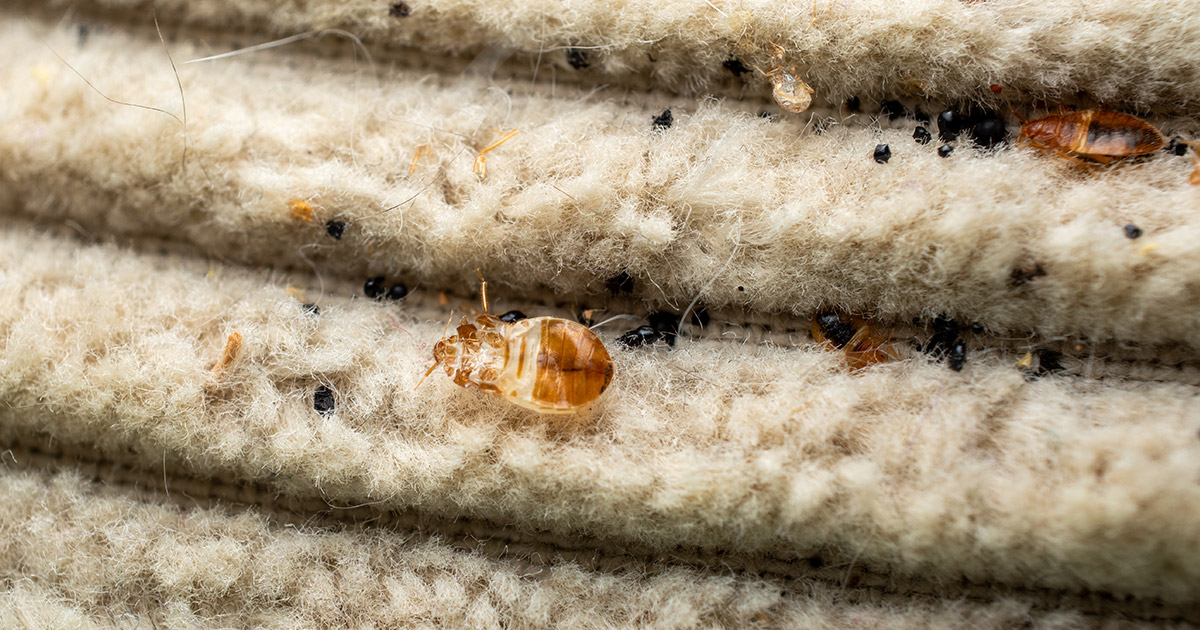
Although their lifespan may seem relatively short, it’s long enough for them to keep reproducing. A single bed bug can go through several stages and continue adding to the problem. That’s why even a few bugs can turn into a much larger infestation over time.
Bed Bug Life Cycle Stages Explained (Egg to Adult)
To understand how infestations grow, it helps to look at the full bed bug life cycle from egg to adult. Each stage plays a role in how quickly their numbers increase and how difficult they can be to eliminate.
Egg Stage: How Bed Bugs Start Spreading
One of the biggest challenges with bed bugs is how easy it is to miss the egg stage. Female bed bugs lay tiny, pale eggs in hidden areas such as mattress seams, cracks in furniture, and along baseboards. These eggs are about the size of a pinhead, which makes them very difficult to spot without a close inspection.
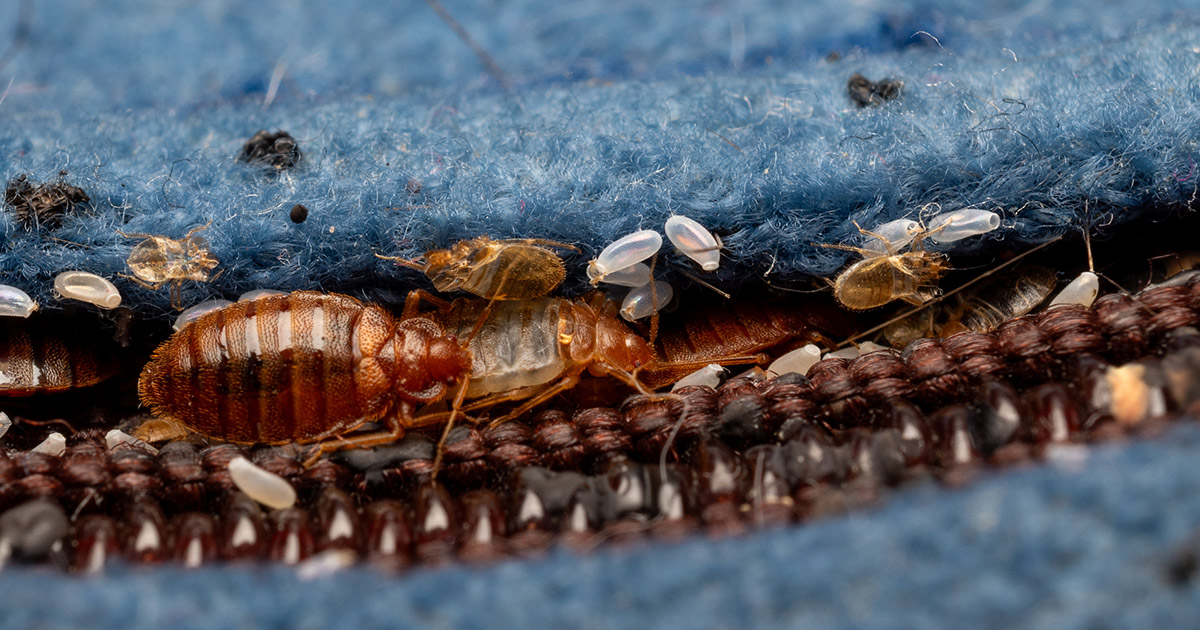
These eggs typically hatch within 6 to 10 days, and once they do, the newly hatched bed bugs begin feeding almost right away. Because the eggs are so hard to detect, they often survive initial cleaning or DIY treatments.
That’s why bed bugs can seem to come back even after you think you’ve gotten rid of them.
Nymph Stage: Rapid Growth & Feeding
Once the eggs hatch, bed bugs move into the nymph stage, where they begin feeding and growing almost immediately. Newly hatched nymphs are small and light in color, which allows them to remain hidden while they begin feeding.

To reach adulthood, a bed bug nymph needs to go through five molts, shedding its outer layer each time it grows. A blood meal is required before each molt, so they actively seek out a host at every stage. This repeated feeding and growth process allows them to mature quickly, which is why infestations can expand faster than most people expect.
Adult Stage: Reproduction & Lifespan
Once bed bugs reach adulthood, they are fully developed and capable of reproducing. At this stage, they continue feeding regularly and remain hidden in cracks, furniture, and bedding when not active. While they are slightly easier to see than younger bed bugs, they are still good at staying out of sight.
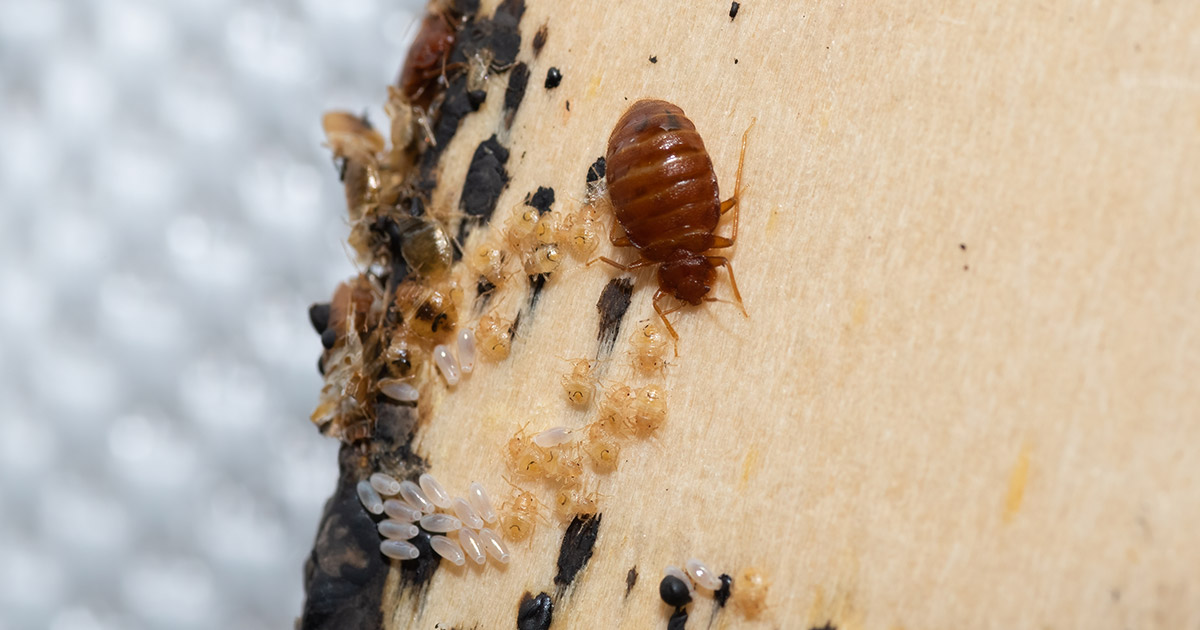
Reproduction is what makes this stage especially concerning. A single female can lay eggs consistently throughout her lifespan, which helps maintain and grow the infestation. Because adults continue feeding and reproducing at the same time, the problem does not stay contained. Instead, it keeps expanding unless every stage is properly addressed.
Why Bed Bugs Are So Hard to Eliminate
Getting rid of bed bugs isn’t as simple as it sounds. They don’t just live in one place or follow a predictable pattern. They can stay hidden in tight spaces, come out only when needed, and continue reproducing while going unnoticed. This combination makes them especially difficult to deal with once they’ve settled in.

Many DIY treatments only deal with what’s visible. Sprays and basic cleaning might kill some adult bed bugs, but they often miss eggs and younger bugs hidden deep in furniture or small cracks. Once those eggs hatch, the infestation starts growing again, which is why the problem keeps coming back for many homeowners. It becomes even harder to control when you consider how long bed bugs can survive without feeding.
How Long Can Bed Bugs Survive Without Food?
Bed bugs are surprisingly resilient when it comes to surviving without food. In many cases, they can live for several weeks or even months without feeding, depending on the environment. Cooler temperatures can actually slow their metabolism, allowing them to survive even longer without a blood meal.
Leaving a room empty doesn’t necessarily solve the problem. Bed bugs can remain hidden for extended periods and wait for a host to return. Once they have access to food again, they begin feeding, and the infestation resumes.
Stop Bed Bugs at Every Life Cycle Stage with Professional Treatment
Understanding how long bed bugs live makes one thing clear. This isn’t a problem that goes away on its own. They can survive for months, continue reproducing, and stay hidden for long periods, which makes them difficult to fully eliminate. That’s why infestations often return after initial treatment, especially when eggs and younger bugs are missed.

If you’re dealing with bed bugs or suspect an infestation, professional treatment is the most reliable way to break the cycle at every stage. Bed Bug Exterminator Pro focuses on complete removal, targeting not just the visible bugs but also the hidden eggs and developing stages that often get missed.
Their experienced team uses proven methods designed to stop infestations from returning, so you can get lasting results instead of temporary relief.